


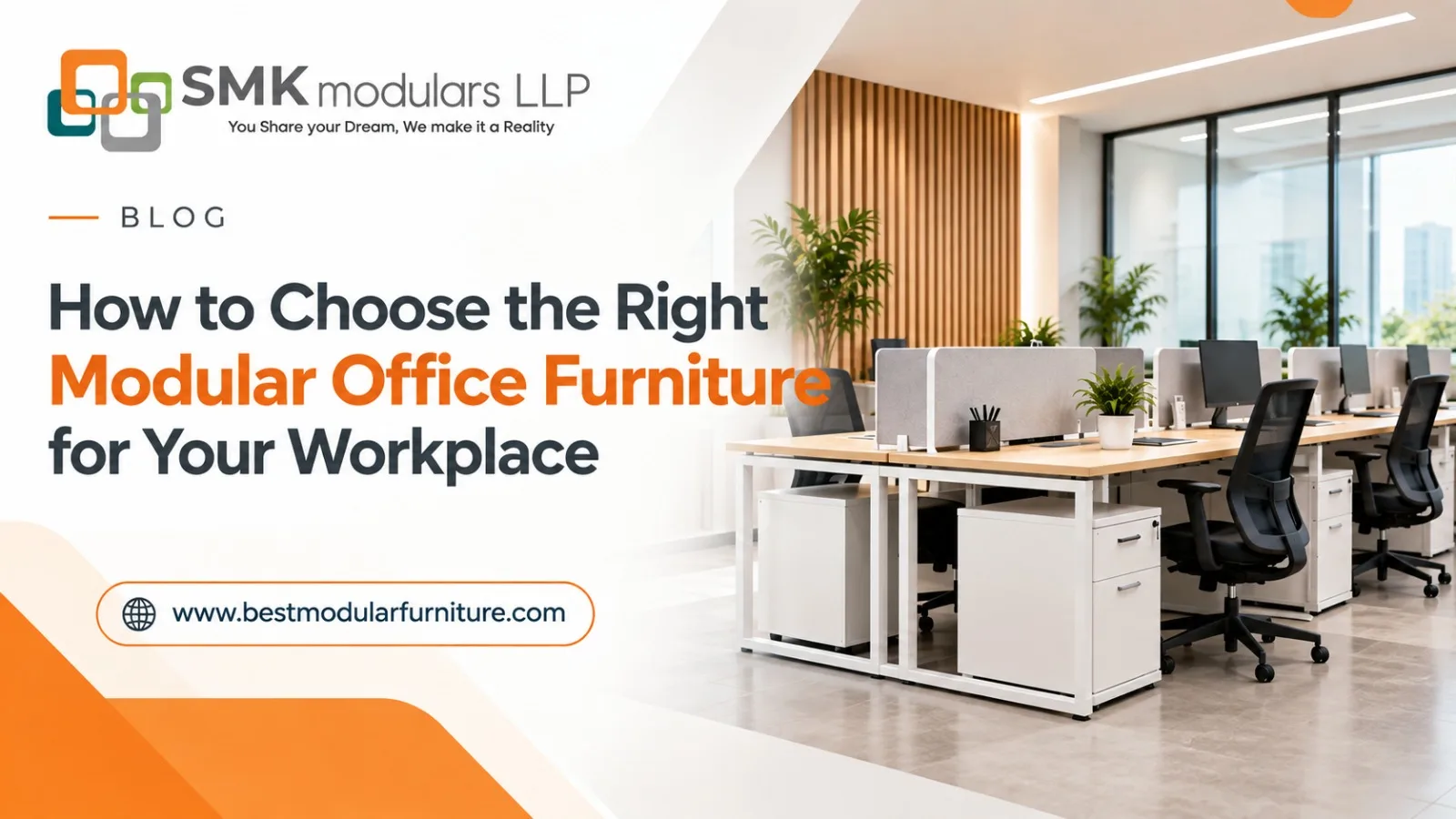
Choosing the right office furniture is about more than selecting desks and chairs that look good. The right furniture should support your employees, use space effectively, provide sufficient storage, accommodate technology, and allow the workplace to adapt as your business grows.
Modular office furniture has become a practical solution for modern workplaces because you can configure, rearrange, and expand individual components to meet changing requirements.
If you are planning a new office, renovating an existing workplace or expanding your team, here are the key factors to consider when selecting modular office furniture.
What Is Modular Office Furniture?
Modular office furniture consists of individual furniture components that can be combined into different configurations. Workstations, desks, partitions, storage units, and other elements can be arranged according to the available space and workplace requirements.
Unlike fixed furniture, modular systems can generally be dismantled, moved, or reconfigured when the office layout changes. This makes them useful for businesses that expect changes in team size, departments, or workspace requirements.
For businesses looking for modular office furniture India solutions, the flexibility of modular systems can be particularly useful when planning offices of different sizes and layouts.
1. Start With Your Office Space
Before selecting furniture, understand the space you have available.
Measure the office and identify:
- Employee work areas
- Manager cabins
- Meeting and conference rooms
- Reception areas
- Storage requirements
- Walkways and circulation areas
- Doors and windows
- Electrical and networking points
- Collaboration or breakout areas
A good furniture layout should provide sufficient workspace without making the office feel overcrowded. Space planning is therefore one of the first steps in selecting suitable office furniture.
A professional furniture manufacturer can also help create a layout based on your available floor area and seating requirements.
2. Understand How Your Employees Work
Every department may have different furniture requirements.
For example, an accounts team may require organized storage and dedicated workstations, while a creative or sales team may benefit from more collaborative arrangements.
Consider:
- How many employees need workstations?
- Which teams work together frequently?
- Which employees require privacy?
- Do employees use multiple monitors?
- Is personal storage required?
- Will the number of employees increase?
- Do you need collaborative work areas?
Answering these questions will help you select an appropriate modular office furniture configuration rather than choosing furniture based only on appearance.
3. Select the Right Workstation Configuration
Workstations are one of the most important components of a modern office.
Depending on the available space and work requirements, you can consider configurations such as:
Linear Workstations
Suitable for offices where employees work alongside each other and require individual work areas.
L-Shaped Workstations
Useful where employees require additional desktop space for monitors, documents and equipment.
Cluster Workstations
A practical option for teams that work together and need efficient use of floor space.
Partitioned Workstations
Partitions can provide a greater degree of visual separation and privacy while maintaining an organized office layout.
Managerial Workstations
Designed with additional workspace and storage requirements for managers and team leaders.
The right configuration should balance individual workspace, movement, collaboration and available floor area.
4. Prioritize Comfort and Ergonomics
Office furniture is used every working day, so employee comfort should be an important consideration.
When selecting furniture, look at:
- Desk height
- Desk depth
- Legroom
- Chair compatibility
- Monitor placement
- Edge finishing
- Distance between workstations
- Accessibility of storage
- Space for movement
An attractive office may not be practical if employees have limited legroom or insufficient working space.
Ergonomics should therefore be considered during the initial furniture planning stage rather than after installation.
5. Consider Storage Requirements
Storage is another important part of office furniture selection.
Offices may need space for:
- Documents and files
- Stationery
- Office equipment
- Personal belongings
- Product samples
- Records and supplies
Depending on the layout, you can integrate storage with workstations or use separate storage cabinets, pedestals, shelving and file units.
Well-planned storage can help maintain a cleaner and more organized workplace.
6. Plan Cable Management
Modern offices depend on computers, monitors, chargers, networking equipment and other electronic devices.
Poorly managed cables can create clutter and make an otherwise well-designed office look untidy.
When selecting modular furniture, check whether the system can accommodate:
- Electrical cables
- Network cables
- Monitor connections
- Power sockets
- Charging requirements
- Cable routing
Integrated cable management can help maintain a cleaner workstation and make future changes easier.
7. Check Materials and Build Quality
The appearance of furniture is important, but quality should not be overlooked.
Before selecting a modular furniture supplier, consider the:
- Board or panel material
- Surface finish
- Hardware
- Fittings
- Edge finishing
- Structural strength
- Ease of maintenance
- Expected usage
- Manufacturing quality
Avoid selecting furniture solely on the basis of the lowest initial price. Furniture used every day should be evaluated for its construction, durability, and suitability for the workplace.
8. Think About Future Expansion
Your office requirements today may not be the same a few years from now.
If your business is growing, consider whether the furniture system can accommodate:
- Additional employees
- New departments
- Changing workstation layouts
- Additional storage
- Office relocation
- Department restructuring
One of the advantages of modular systems is that components can be rearranged or expanded as requirements change.
This makes flexibility an important factor when selecting modular office furniture India solutions.
9. Match Furniture With Your Brand Identity
Office furniture also contributes to the overall appearance of your workplace.
Consider finishes, colours, partitions, desks and storage solutions that complement your:
- Brand colours
- Corporate identity
- Interior design
- Industry
- Workplace culture
A well-coordinated furniture design can create a professional and consistent appearance across reception areas, workstations, meeting rooms and cabins.
Modular furniture is available in different materials, colours and designs, allowing businesses to customize their workplace according to their requirements.
10. Choose the Right Modular Furniture Manufacturer
The furniture itself is only one part of an office project. The manufacturer or supplier you choose can also affect the overall experience.
Look for a company that can support you with:
- Space planning
- Furniture design
- Material selection
- Manufacturing
- Customization
- Installation
- Project coordination
- After-sales support
A manufacturer with an end-to-end process can make it easier to coordinate design, production and installation.
SMK Modulars LLP provides modular office furniture and turnkey interior solutions, with services covering design, manufacturing and on-site installation. The company states that it has more than 25 years of experience in the furniture industry and uses CNC manufacturing technology.
Modular Office Furniture: A Practical Choice for Modern Workplaces
Choosing the right furniture requires more than comparing designs and prices. You need to consider your office layout, employee requirements, ergonomics, storage, technology, materials, future expansion and overall workplace design.
The right modular office furniture can help create a workplace that is functional, organized and adaptable to changing business requirements.
Whether you are setting up a small office, expanding a corporate workspace or planning a complete office interior, start with your requirements and choose furniture around the way your workplace actually functions.
Looking for Modular Office Furniture for Your Workplace?
SMK Modulars LLP provides modular furniture solutions for corporate offices and commercial spaces, with design, manufacturing and installation support.
Contact Us